|
|||||||
| 姓名 | 職稱 | 考試名額 | 分機 | 辦公室 | 實驗室 | ||
| 1 | 柯明道 | 教授 | 0 | 31573 | 工程四館644室 | 工程四館307室 | mdker@nycu.edu.tw |
| 2 | 許恒通 | 教授 | 0 | 31985 | 交映樓615室 | 交映樓604室 | hthsu@nycu.edu.tw |
| 3 | 張國恩 | 教授 | 0 | 31884 | 交映樓613室 | 工程五館B42、B43 | gechang@nycu.edu.tw |
| 4 | 王仲益 | 副教授 | 0 | 31695 | 交映樓612室 | 交映樓604室 | cywang72@nycu.edu.tw |
| 5 | 李宗恩 | 助理教授 | 0 | 31635 | 交映樓611室 | 工程五館B42、B43 | telee@nycu.edu.tw |
| 6 | 李義明 | 教授 | 0 | 52974 | 電子資訊中心ES812室 | 電子資訊中心622室 | ymli@nycu.edu.tw |
| 7 | 寒川誠二 | 教授 | 0 | 54623 | 交映樓602室 | 交映樓602室 | seiji.samukawa.e2@nycu.edu.tw |
| 8 | 許鉦宗 | 教授 | 0 | 55805 | 田家炳616室 | 田家炳616室 | sheujt@nycu.edu.tw |
| 數據依系辦公室收到之指導教授協議書作為登記,老師招收學生事宜請與老師討論。 | |||||||
國立陽明交通大學半導體工程學系申請入學
指定項目 第二階段甄試「認識本系及綜合筆試」注意事項
一、甄試日期:115年5月16日(六)
二、甄試地點:國立陽明交通大學光復校區–工程四館B1合勤講堂
三、主要流程:
半導體工程學系分兩個組招生,[奈米科學組] 9:00~12:00 與 [固態電子組] 13:20~16:20 分別進行業界講座、認識本系、師生座談、綜合筆試。
除綜合筆試外,其餘活動皆邀請家長們可一同參與!
[奈米組] 報到 8:30~9:00、[奈米組] 綜合筆試 11:40~12:00
[固態組] 報到 12:50~13:20、[固態組] 綜合筆試 16:00~16:20
四、報到時,請務必攜帶本人身份證件或可證明身份之有照片的健保卡、駕照、護照等,以利查驗。
五、【當日餐盒】均於筆試結束發送,由考生領取 [僅提供考生一份]。
六、【筆試注意事項】試場內除應用文具外,不得攜帶書籍、簿本、電子計算器、電子呼叫器、手機、PDA、電子字典等具有通訊、記憶計算等功能或其他有礙試場安寧、妨害考試公平性之各類物品入座。計時器之鬧鈴功能須關閉。違者送本系系務會議審議。
七、若有衝堂問題或任何問題,煩請直接來電 03-5731654、03-5731676。
請備取上的報到同學,參考: 正取生報到注意事項 (繳交附件資料)
115學年度電機工程學系碩士班 半導體組可指導教授名單[隨時更新]
本所將電話通知備取上考生,如電話未能連絡上,將以電子郵件通知考生,但不另行寄發書面遞補錄取通知。
(3/31前) 備取生報到注意事項
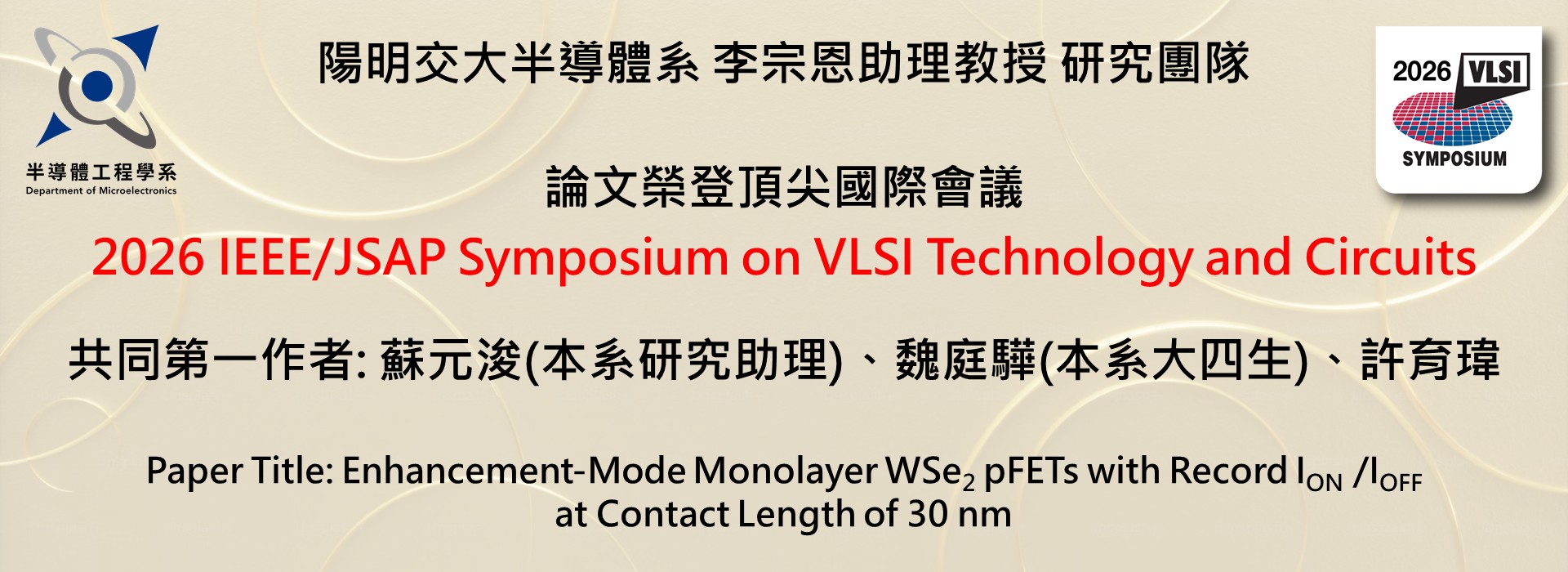
🎉 狂賀!本系研究成果登上國際頂尖會議 🎉
本系李宗恩老師指導之大四學生魏庭驊,其研究成果成功獲選發表於國際頂級會議
IEEE/JSAP Symposium on VLSI Technology & Circuits 2026(VLSI 2026),展現本系在先進半導體領域的卓越研發實力與人才培育成果。
🔬 研究亮點
▪ 本研究聚焦於單層二維材料 WSe₂ 電晶體,在持續微縮趨勢下,仍可同時維持高效能與低漏電特性。
▪ 透過材料工程與接觸工程之創新優化,有效降低接觸電阻並顯著提升元件整體表現。
▪ 研究成果顯示,二維材料電晶體具備成為未來高效能與低功耗晶片關鍵技術之潛力。
🌍 關於 VLSI 國際會議
IEEE/JSAP Symposium on VLSI Technology & Circuits 為微電子與超大型積體電路領域之頂級國際會議之一,每年於美國夏威夷與日本京都輪流舉行,匯聚全球頂尖學術機構與產業領袖,發表最前沿之元件、製程與電路技術,具有高度學術影響力與嚴謹審查機制。
此次由大學部學生以第一線研究成果登上 VLSI 國際舞台,實屬難得,充分展現本系在前瞻半導體技術上的深厚實力與國際競爭力。
👏 再次恭賀李宗恩老師與魏庭驊同學!
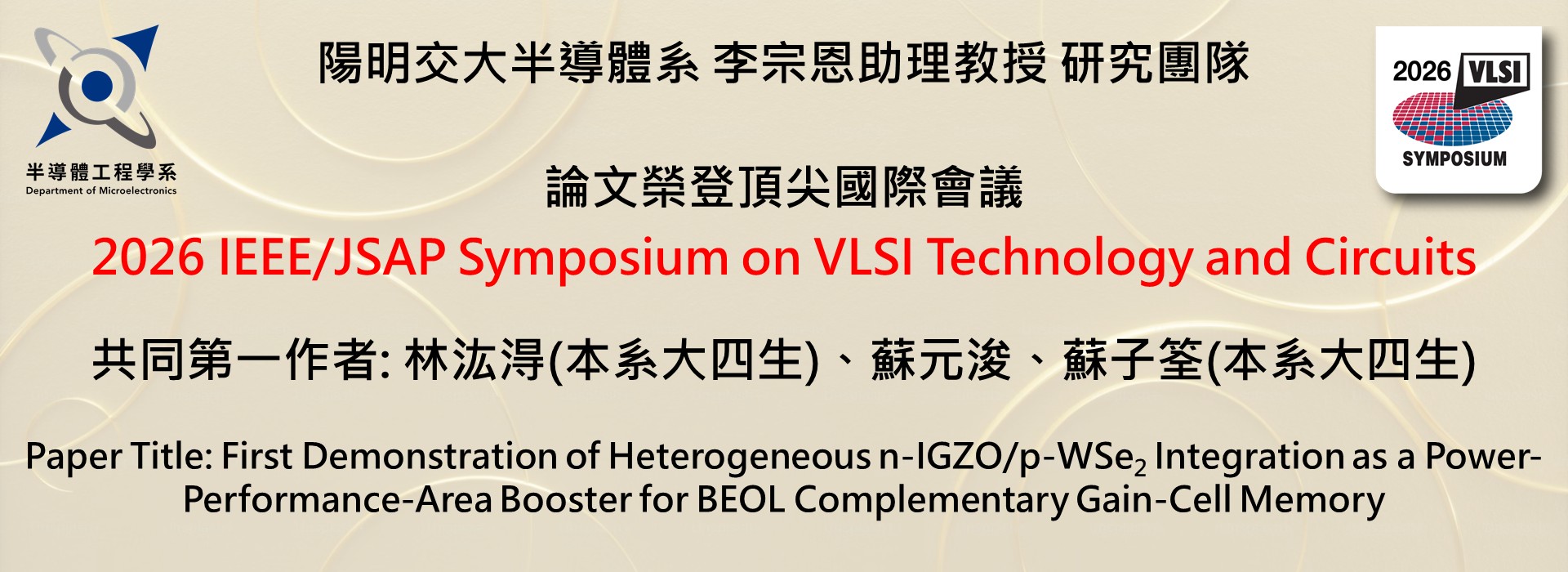
🎉 狂賀!本系再傳捷報 勇登國際頂尖會議 🎉
本系李宗恩老師指導之大四學生林汯淂、蘇子筌,其研究成果成功獲選發表於國際頂級會議
IEEE/JSAP Symposium on VLSI Technology & Circuits 2026(VLSI 2026),再次展現本系在先進積體電路與記憶體技術領域的深厚實力。
🔬 研究亮點
▪ 本研究提出一種可整合於晶片後段(BEOL)的創新增益單元記憶體架構,結合新穎材料技術,兼具高效能與高密度優勢。
▪ 透過反向耦合機制設計,有效抑制元件間干擾,顯著提升讀取穩定性,並兼顧電路設計與系統層級應用之可行性。
▪ 研究成果顯示,此新型記憶體具備應用於未來高效能運算與3D立體堆疊晶片之潛力。
🌍 關於 VLSI 國際會議
IEEE/JSAP Symposium on VLSI Technology & Circuits 為微電子與超大型積體電路領域之頂級國際會議之一,每年於美國夏威夷與日本京都輪流舉行,匯聚全球頂尖學術機構與產業領袖,發表最前沿之元件、製程與電路技術,具高度影響力且審查嚴謹。
本次由大學部學生以創新記憶體架構成果登上國際舞台,實屬難得,不僅展現學生卓越研究能力,更體現本系在前瞻半導體與系統整合領域的國際競爭力。
👏 再次恭賀李宗恩老師、林汯淂與蘇子筌同學!
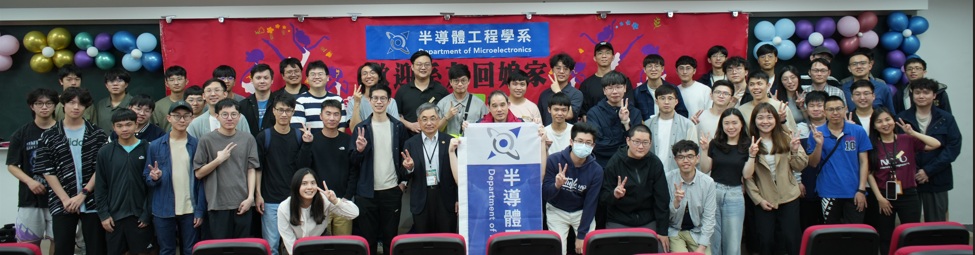
活動:國立陽明交通大學半導體工程學系暨奈米學士班系友回娘家
日期:115年4月11日(六)
時間:12:00~14:00
地點:工程四館117室 [系辦公室106室]
請於4/8(三)前填寫表單: https://forms.gle/kSNEkqSnbw4ayd9s8
回來聚聚聊聊唄~敬備午餐與在校生共享喲~

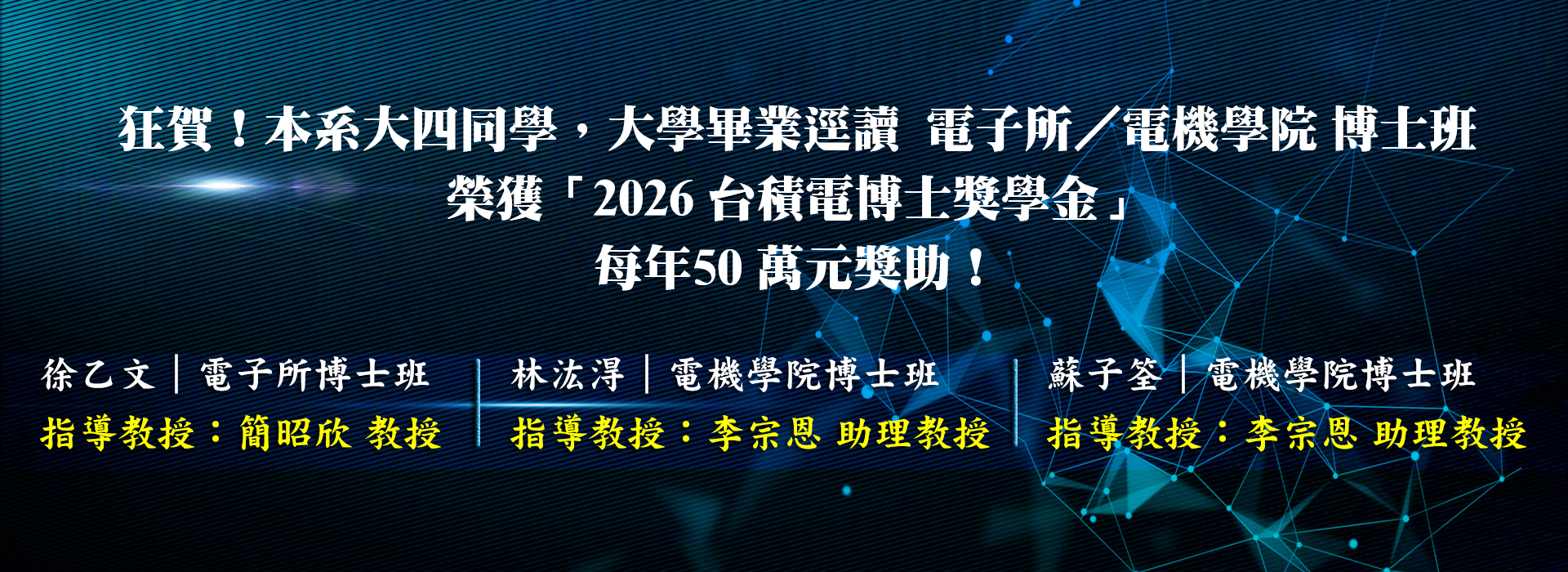
狂賀本系大四同學 大學畢業逕讀 電子所/電機學院 博士班
並在眾多優秀競爭者中脫穎而出,榮獲2026台積電博士獎學金!
徐乙文|電子所博士班
指導教授:簡昭欣 教授
林汯淂|電機學院博士班
指導教授:李宗恩助理教授
蘇子筌|電機學院博士班
指導教授:李宗恩 助理教授
國立陽明交通大學
一、需才系所:半導體工程學系
二、徵聘職級:專任助理教授以上
三、徵聘員額:數名
四、申請截止日期:即日起至聘到適合的人選為止
五、起聘日期:最快2026年8月
六、應徵資格:需於起聘前獲得教育部認可之博士學位者,並具研究能力。
七、專長領域:
(1)電子材料、元件與製程技術、量子計算、積體光學與類神經網路技術、異質整合與堆疊及先進3D封裝。
(2)與半導體相關之電子電機、物理、化學及材料新興領域。
(3)電路設計(類比電路、數位電路、混合訊號電路)、新興運算架構及節能與低延遲電路設計。
(4)須具備英語授課能力,本校新進教師前三年需每學年至少以英文教授一門專業課程。
八、應徵請檢附資料:
(1)應徵教師履歷摘要表(如附件,word檔格式 請由此下載 ,請勿自行設計格式)
(2)重要研究著作全文抽印本(至多五件並自行擇一為代表作,餘列參考作,五年內取得博士學位者請另附博士論文)
(3)研究著作表(若已接受但尚未出版之著作,請附DOI)
(4)個人重要研究成果簡述(檢附一頁相關資料)
(5)未來5年之研究方向、目標及資源。
(6)教學計畫:列舉至少四門課程、並需可開設理工基礎課程,均請提供課程大綱。
(7)推薦函(至少三封)可密封隨申請資料寄送,或請推薦人逕寄 linic@nycu.edu.tw
(8)大學、碩士、博士之學位證明及成績單正式影本。其中若持國外學歷者,應將國外學位證書及成績單先經我國駐外館處驗證完成。
(9)其他有助於審查之資料(如研究興趣、教學理念等)
九、資料寄送:應徵者上述資料請依序彙整後,郵寄紙本或電子檔至300新竹市大學路1001號工程四館 國立陽明交通大學半導體工程學系 教師聘任委員會收;linic@nycu.edu.tw。
並請將資料同步上傳至電機學院教師徵聘平台(含推薦信)並指定應聘:半導體工程學系 https://ece.nycu.edu.tw/Faculty/pmail/email.aspx?Parser=99,21,256
十、各職級教師薪資包含教育部部定薪資之外,另有彈性薪資方案、教育部玉山(青年)學者計畫、台積電青年學者及國科會年輕學者專案計畫例如跨世代年輕學者方案、傑出人才基金會相關補助、陽明交通大學產學合作計畫主持人費等。
◎所寄資料,不論是否通過初審,一律不寄還
◎所寄資料僅供本次教師徵聘使用
徵聘諮詢:
聯絡人:柯明道主任 mdker@nycu.edu.tw 03-5712121#31573
行政事務:
聯絡人:林宜臻助理
系所網站:https://mee.nycu.edu.tw
聯絡電話: 03-5712121 #31676或#31654 傳真號碼:03-5735390
Email:linic@nycu.edu.tw
國立陽明交通大學電機學院半導體工程學系
張國恩教授–矽光子實驗室誠徵專題生
—從矽開始,用光改變未來—
🔬【誠徵|實驗室專題生】
如果你對下面幾件事感到一點點心動,那你很可能就是我們在找的人👇
✨ 對「為什麼」充滿好奇
✨ 想動手做實驗探索世界,而不只有上課和考試
✨ 對半導體、矽光子、光電有興趣
✨ 希望專題不是「交差了事」,而是真的學到東西,提升自我
🔬【關於我們】
研究領域|我們在做什麼?
我們專注於矽光子技術之研究,著重於新穎的IV-IV族材料磊晶、矽光子光電元件之開發、新穎矽光子光電積體之設計與開發、及矽光子技術之前瞻應用。
目前研究主軸
- 材料成長: 新穎IV-IV族材料磊晶與分析。
- 元件發展: 創新矽光子主動元件(雷射/LED發光元件、光調變器、光偵測器)。
- 矽光子電路設計: 新穎矽光子光電積體之設計、下線製作、與量測。
- 矽光子系統: 共封裝光學與系統開發
【徵求條件】
- 對象:大二~大四學生(不限陽明交大)
- 對半導體、矽光子、光電有興趣。
- 願意投入,換取真正能力,不怕嘗試💪
- 具備半導體、光學基礎知識。
- 需可長期參與者(至少一學期以上,一年以上更好)。
🌟 研究資源|你會獲得什麼?
- 核心能力內功提升: 定期研究討論,協助您釐清研究內容及解決問題,培養前瞻研究思考、實驗設計執行、以及資料分析核心能力。
- 團隊合作經歷: 有機會參與大型合作研究計畫,與頂尖團隊之高手切磋。
- 口袋變深: 表現積極者給予研究津貼。
- 論文發表機會:有機會參與國內外期刊或研討會論文撰寫,以及參加國內外研討會發表研究成果,對推甄、面試、研究所、出國留學高度加分。
- 國科會大專生計畫機會:表現良好同學可協助申請國科會大專生研究計畫,除了有進口袋的研究津貼之外,個人CV上可記上一筆光輝榮譽,表現傑出者甚至有機會獲得大專學生研究創作獎,對推甄、面試、研究所、出國留學高度加分。
- 國際交流機會: 有機會參與大型國際合作研究計畫,與歐美日國際頂尖團隊合作,以及出國交流、交換、短期研究訪問、及未來出國留學機會。
- 強力推薦: 表現良好同學能獲得強而有力推薦信,作為日後升學及求職使用。
💡 專題不只是畢業門檻,而是你第一次真正「像研究者一樣思考」的開始。
如果你想讓大學生活多一點挑戰、多一點成就感,歡迎加入我們!
有興趣同學請寄信於下方Email,我們會再回覆通知,也歡迎來找老師聊聊
Email: gechang@nycu.edu.tw
Email標題:【報名】姓名–系級(若非陽明交大學生,請在後方寫上學校名稱)
- Email內容:
- 姓名
- 學校系級
- 想參與專題原因/研究興趣(簡述即可,不要太長)
- 聯絡方式(校內分機或email)
- 有助於審查的資料(例如成績單、獎狀等)
*名額有限,限量是殘酷的!
張國恩教授 矽光子實驗室網站
Email:gechang@nycu.edu.tw
聯絡人:張國恩教授
聯絡電話: (03)5731884; 校內分機31884
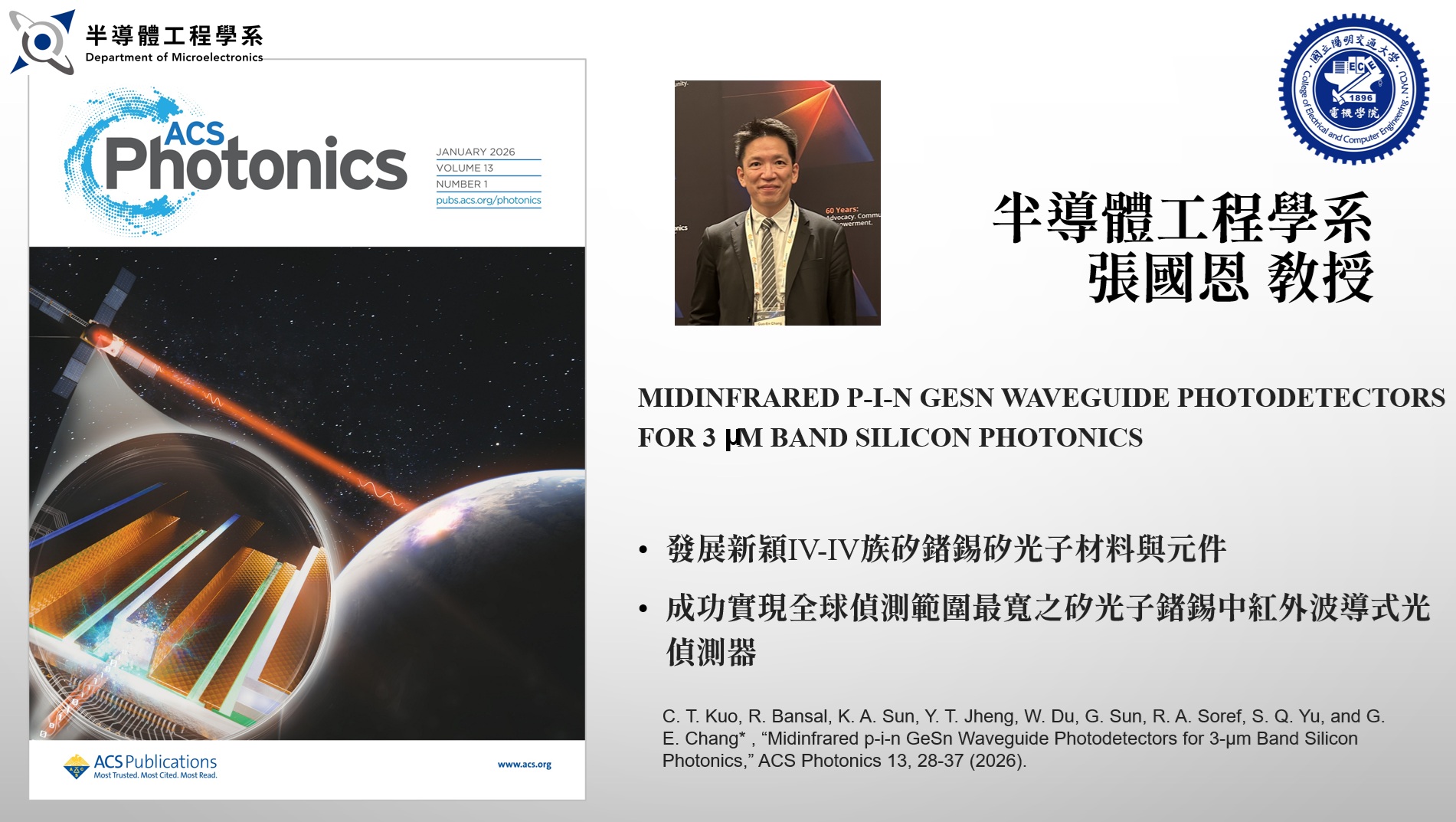
狂賀本系 張國恩教授,論文獲選ACS Photonics期刊封面